
The Ram Mandir at a glance
The Ram Mandir, officially the Shri Ram Janmabhoomi Mandir, stands in Ayodhya and is dedicated to Rama. The consecration of Ram Lalla, the Pran Pratishtha, took place on 22 January 2024. The formal completion of the temple building was marked later, with a flag ceremony on 25 November 2025. These are two different milestones.
A visit takes planning. Entry is regulated, darshan follows a timetable, and phones, cameras and bags are not allowed inside. You can arrange the practical side with the darshan timings and pass guide. If you prefer someone to walk you through the city and its temples, see our Ayodhya temple tours. The background of the site is on the history page.
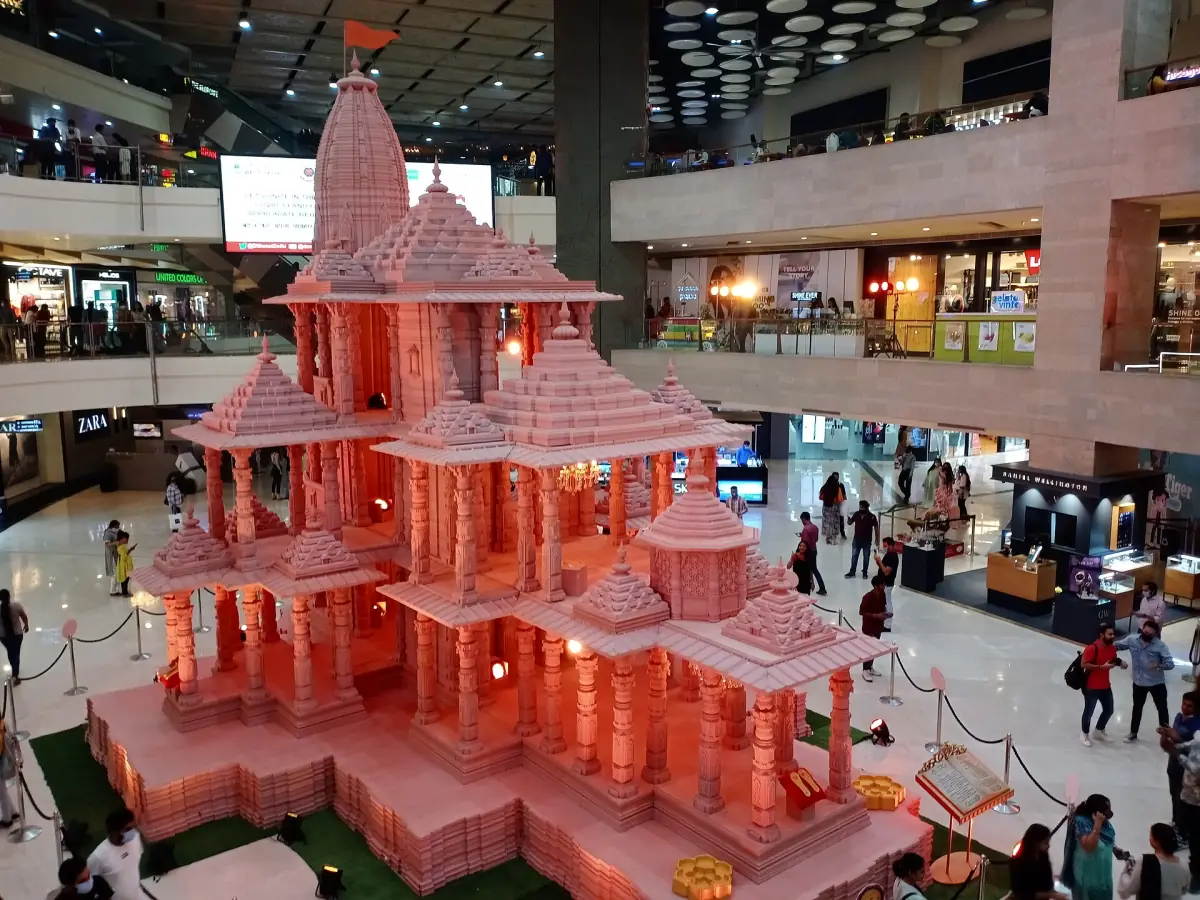
This photo shows a model of the temple on display in a shopping mall in New Delhi. It is not the temple itself.
Our picks: Ram Mandir tours
The two day trips from Lucknow and Varanasi both route past the temple. The guided Lucknow trip is the one that already pays for the monument entries on its route.
Hand-picked tours, booked through GetYourGuide. Prices are indicative starting prices in US dollars (as of October 2026). Tap a tour for live availability and the current price in your currency.
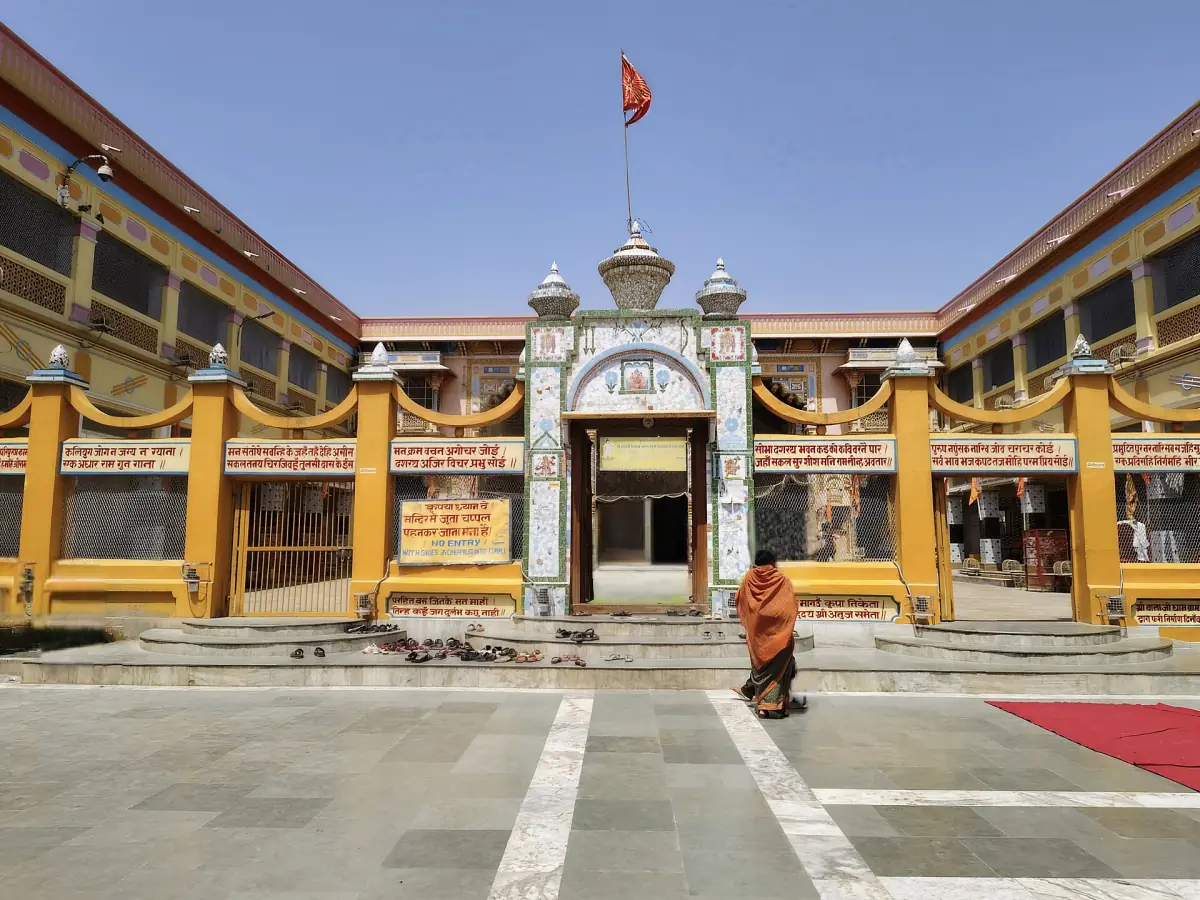
Private guided day trip from Lucknow
- English-speaking private guide
- Monument entries on the route
- Tolls, parking and GST
Return trip by private air-conditioned car with the entries to the listed monuments covered. Special darshan fees and temple donations are not part of the price.
Check availability →Ayodhya day trip from Varanasi
- Guide and boat ride
- Private air-conditioned car
- Hotel pickup and return
A long day covering Ram Mandir, Hanuman Garhi and Kanak Bhawan, with water on board. Lunch and monument entries are not included.
Check availability →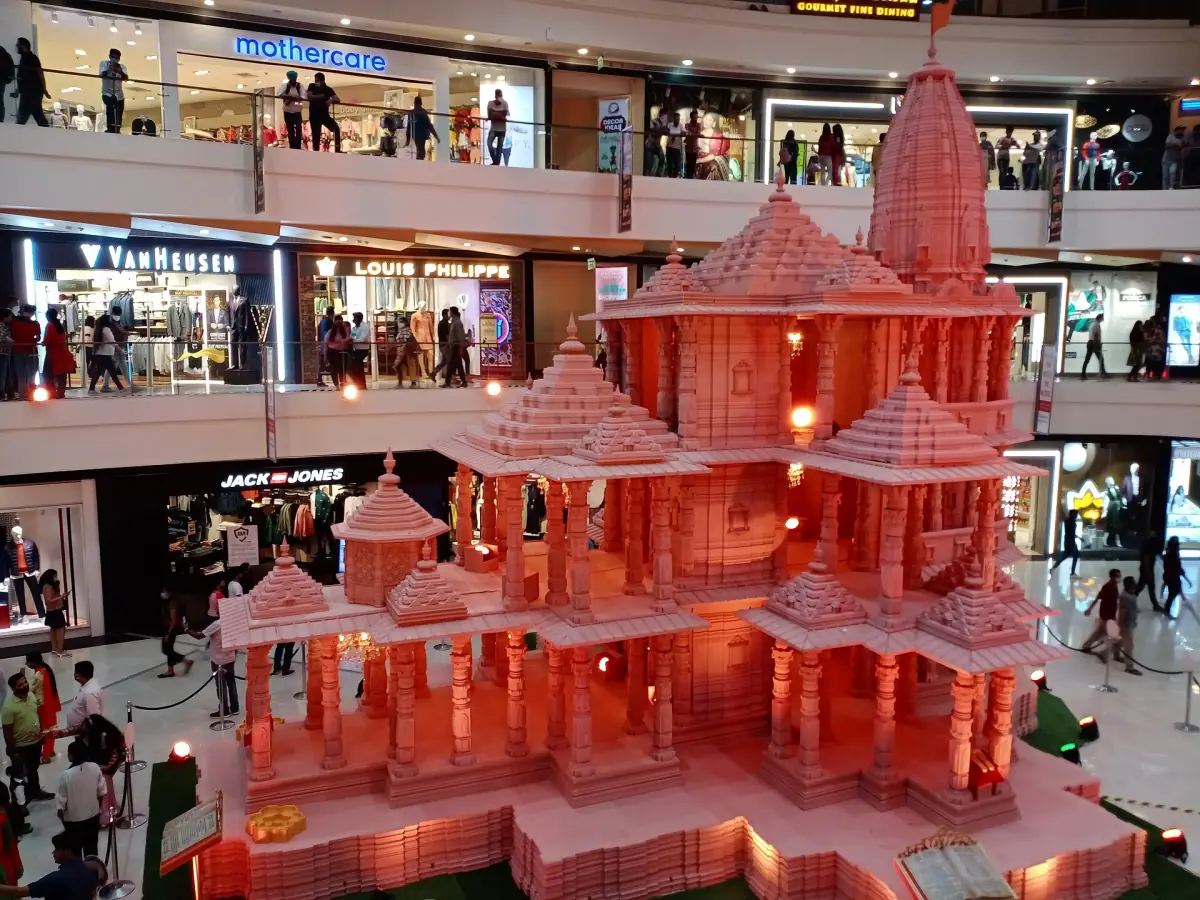
Private Ram Mandir day trip from Lucknow
- Private air-conditioned car
- Hotel pickup and return
The route runs past Ram Mandir, Hanuman Garhi and the Saryu ghats. Camera and monument tickets and the temple rickshaw cost extra.
Check availability →Ayodhya temple tours
Guided visits that cover the Ram Mandir area and the other temples of Ayodhya, with live prices and availability.
Ram Mandir architecture
The temple is built in the traditional Nagara style. It has 392 pillars and 44 doors, and it has 5 mandaps, the pillared halls of a temple. The sanctum of Ram Lalla is on the ground floor.
The dimensions at the 2024 consecration are 380 feet from east to west, 250 feet in width and 161 feet in height. These are the figures from the consecration, not a fresh measurement of the finished complex.
The eastern gate, the Singh Dwar, is reached by 32 steps. The complex also has a Pilgrimage Facility Centre, ramps and medical emergency help. This does not mean that every route inside is step-free, so ask on site if you need an easier way.
Ram Lalla and the sanctum
Ram Lalla is the deity of the temple. The consecration took place in the new temple on 22 January 2024, the day known as the Pran Pratishtha.
The completion of the building came later. The flag ceremony of 25 November 2025 marked the formal end of the construction of the temple. It does not mean that every room in the complex is open to visitors, and building work elsewhere in the city is a separate matter.
Planning a visit
The points that decide how smooth the day goes.
Passes
Sugam darshan passes are free of charge. Book them through the temple trust and do not pay a third party for the pass. Aarti entry is tied to a pass. See the pass and booking section.
Timings
The temple doors open earlier than general darshan begins. A winter schedule applies from 1 November 2026, and times can change, so check the current timetable with the temple administration.
What to leave behind
Phones, cameras, electronic items and bags are not allowed inside. Free storage is available outside the Parkota, the outer wall of the complex. Check the current list with the temple administration.
Clothing
Covering clothing is recommended.
Combine it with other places
The Ram Mandir is one stop among several. By tradition, many pilgrims visit Hanuman Garhi first, the hilltop temple of Hanuman, before they go to the Rama temple. This is a custom, not a rule for entry. Kanak Bhawan lies to the north-east of the Ram Janmabhoomi site, in Ramkot.
The evening belongs to the river. The Saryu ghats with Ram ki Paidi are the place for the evening, and the aarti there is a good counterpoint to a morning at the temple. For more places, see places to visit in Ayodhya.
The Ram Mandir, Hanuman Garhi, Kanak Bhawan and the ghats are separate places with separate rules. There is no single ticket for all of them.
Getting there
Ayodhya has its own airport and two main railway stations.
By air
The Maharishi Valmiki International Airport, code AYJ, lies about 8 to 10 km from the centre. A prepaid taxi typically costs INR 300 to INR 600 as of 2026. A fare to the temple gate is not guaranteed, because access roads can be restricted.
Airport and transfers →By train or road
Ayodhya Dham and Ayodhya Cantt are two different stations. Lucknow is roughly 130 km away by road.
Getting to Ayodhya →Ram Mandir: frequently asked questions
When was the Ram Mandir opened?
The consecration of Ram Lalla, the Pran Pratishtha, took place on 22 January 2024. The formal completion of the temple was marked by a flag ceremony on 25 November 2025.
How big is the temple?
The dimensions at the consecration are 380 feet from east to west, 250 feet wide and 161 feet high. It has 392 pillars, 44 doors and 5 mandaps.
Can I take my phone or camera inside?
No. Phones, cameras, electronic items and bags are not allowed inside. Free storage is available outside the Parkota. Check the current rules with the temple administration before you go.
Do I need to pay for a darshan pass?
No. Sugam darshan passes are free of charge. Book through the temple trust and do not pay a third party for the pass itself.
Is the temple accessible for visitors with limited mobility?
The complex has ramps and medical emergency help, and the eastern gate is reached by 32 steps. Not every route is step-free, so ask on site which way suits you.